
Services
Biomechanical gait assessment
A set of high-precision diagnostic tests to understand how you walk and to prevent injury to the foot, knee, hip and spine.
A Podoactiva biomechanical assessment is a set of diagnostic tests carried out with high-precision technology to understand and prevent problems and injuries of the foot, and how these relate to other structures such as the knee, the hip and the spine.
The assessment builds a complete picture of how you walk and helps to diagnose, or to advise on preventing, muscular and musculoskeletal problems: flat feet, high arches, plantar fasciitis, metatarsalgia, Achilles tendinopathy, muscle overload or recurrent sprains, among others.
It is worth having your gait assessed at least once in your life.
What a Podoactiva biomechanical assessment involves
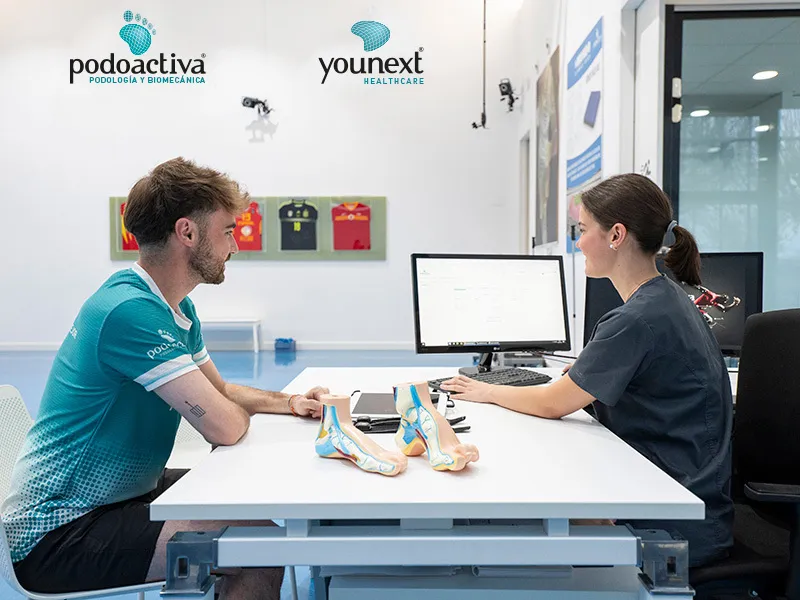
Consultation and history
Alongside height, weight and age, your podiatrist records family history, medication, the activity you do, the footwear you normally wear, any discomfort and previous injuries: everything that bears on the assessment.
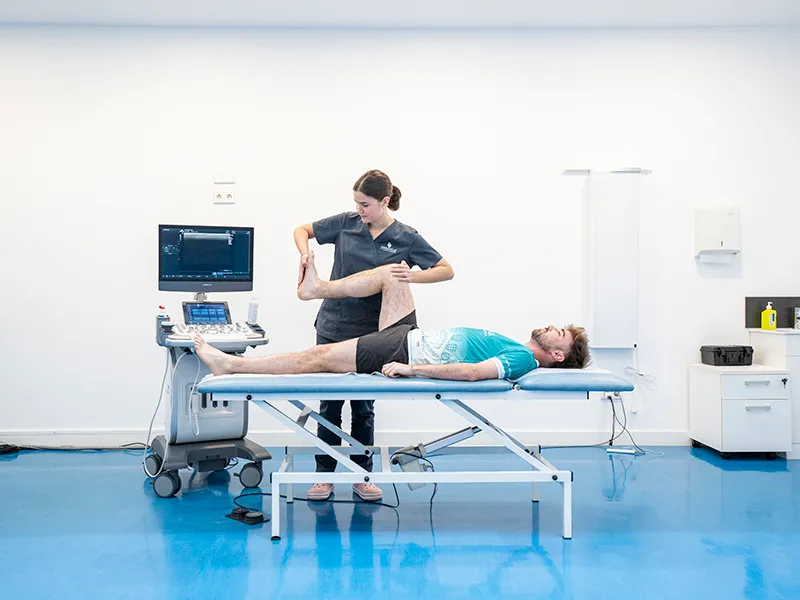
Examination on the couch
Lying face up, the assessment covers leg length discrepancy, hip rotation and joint and muscle range. Face down, tibial torsion and metatarsus adductus; seated, the alignment of tibia, kneecap and foot.
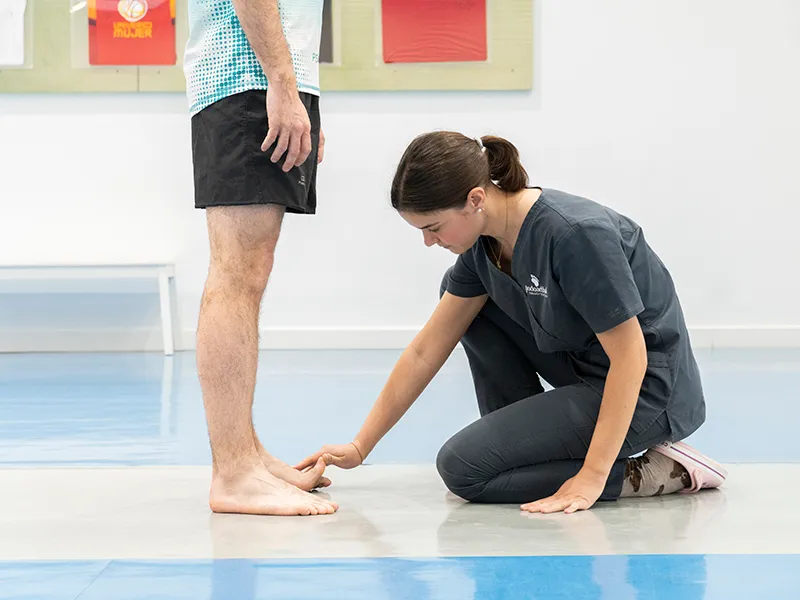
Standing biomechanical tests
With you standing still, a series of static tests shows how flexible the foot is: elasticity, muscle tone and which muscle groups engage. That tells us how the joints behave.
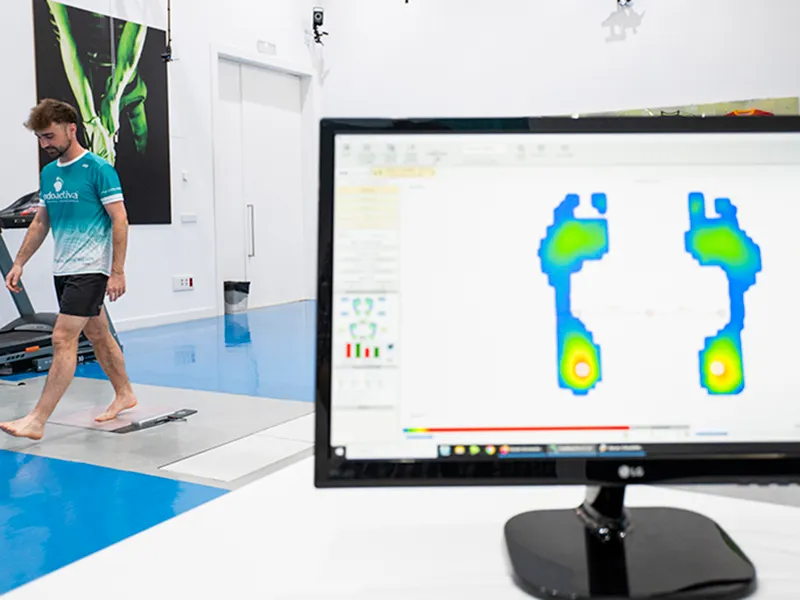
Static footprint on the pressure plate
The baropodometric plate measures the points of highest pressure on each foot, how weight is shared between left and right, and where your centre of gravity sits.
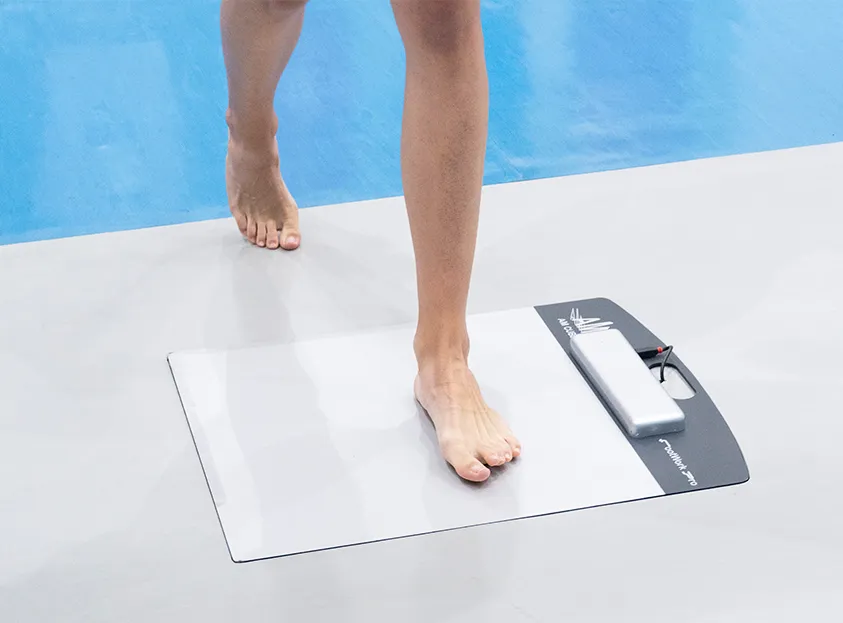
Dynamic footprint
Walking across the plate, each foot is recorded separately. This analyses the feet in motion: peak pressure, how the centre of pressure travels and any rotation.
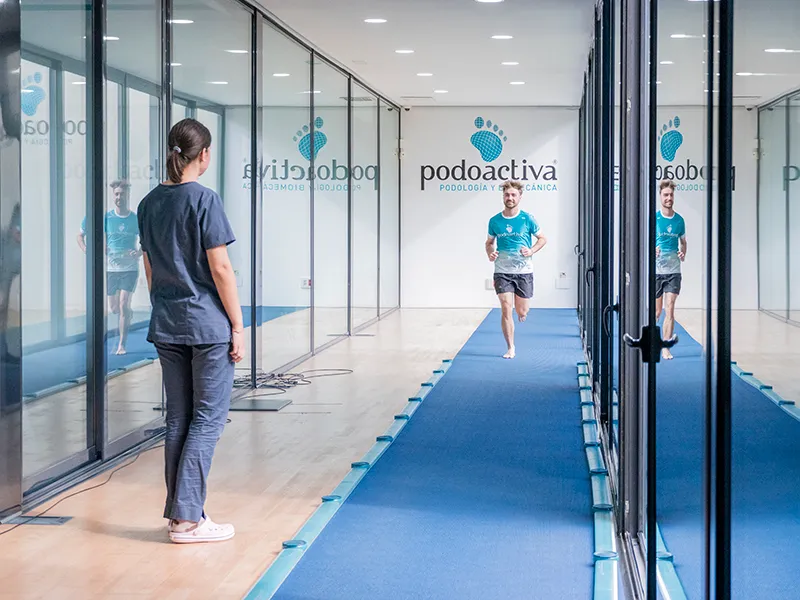
High-speed video
We analyse every movement of the step and what it does to the knee and hip, with systems recording up to 1,200 frames per second — detail the eye cannot catch.
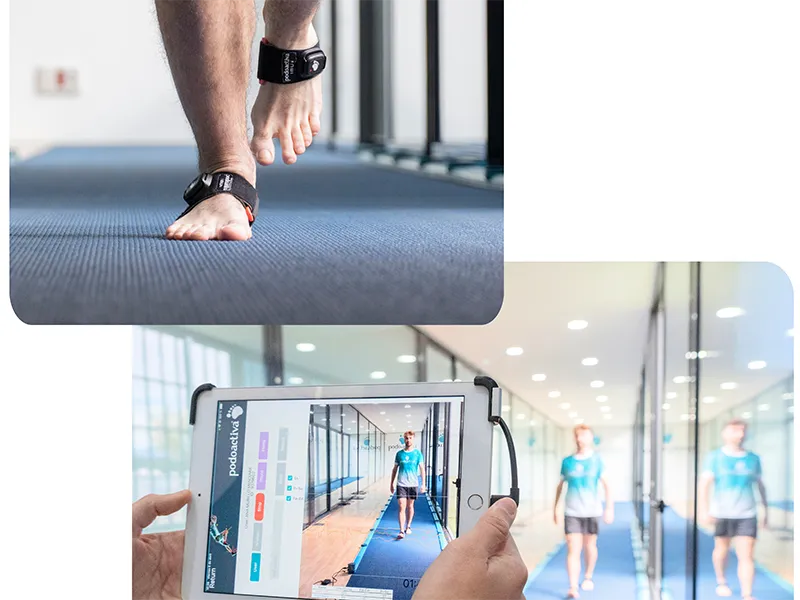
Motion analysis with inertial sensors (IMU)
This measures how symmetrical your gait is, with and without orthotics, flight and contact times for each foot, and jump tests. It is an additional test, used when the podiatrist considers it necessary.
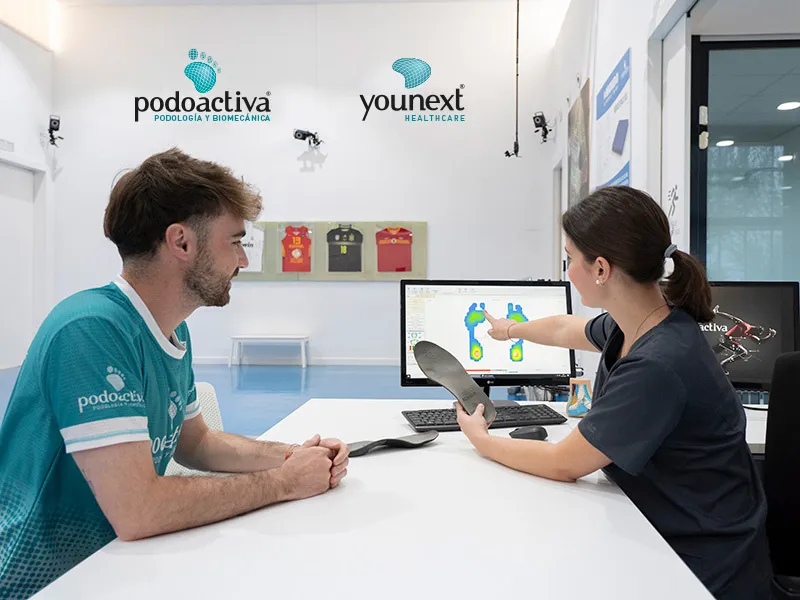
Analysis and written report
Your podiatrist decides whether custom orthotics are needed. They are not prescribed as a matter of course: sometimes stretching or exercise corrects the problem. Either way you receive a full written report.
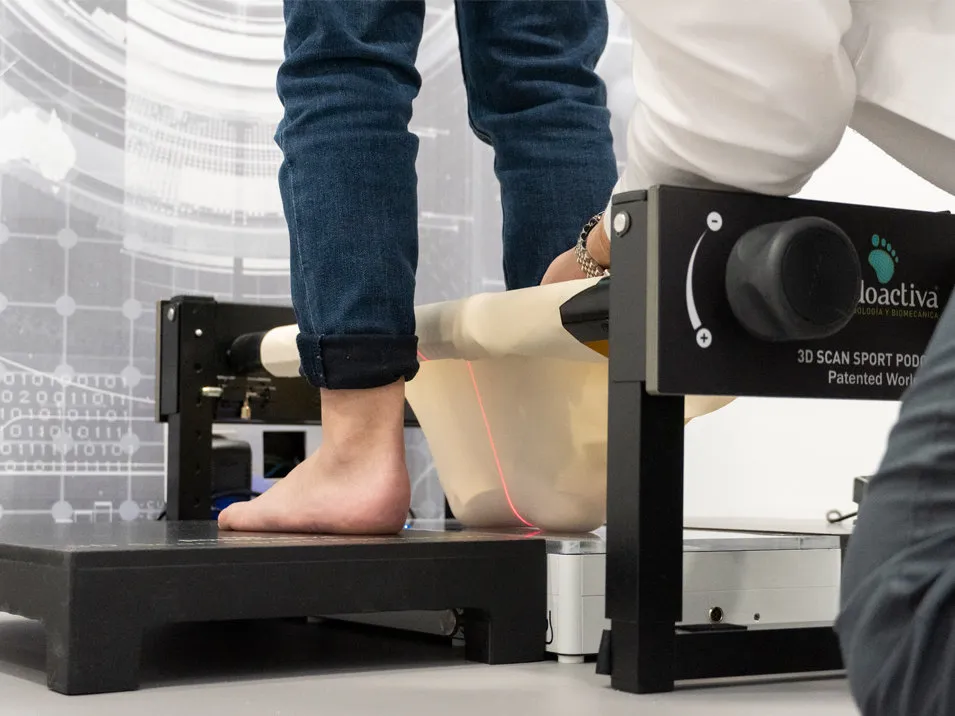
3D Scan Podoactiva foot scan
If orthotics are needed, the foot is scanned with the patented high-precision 3D Scan Podoactiva system, which produces a virtual cast with the foot held in the position the podiatrist has chosen.
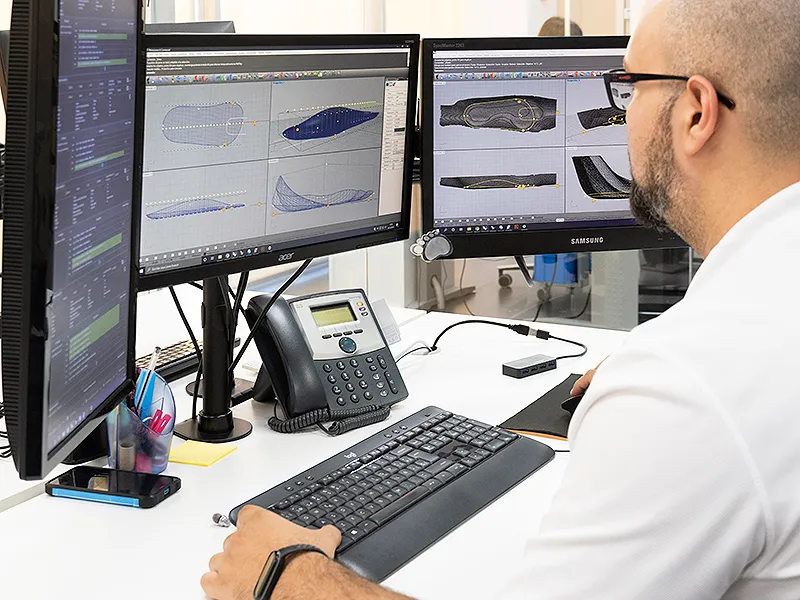
Design and manufacture
The team uses artificial intelligence to refine the design and the quality of each pair, which is then 3D printed in an exclusive material, elastic and hard-wearing.
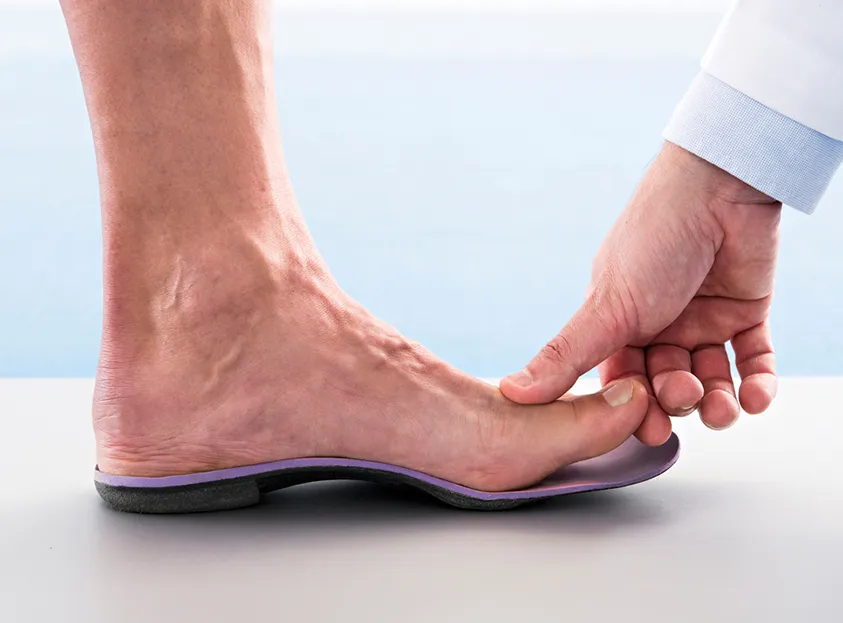
Fitting appointment
Within a few days your custom orthotics arrive at your Podoactiva unit, and you are invited back to try them on and have them adjusted.
Why have your gait assessed
Prevention, and knowing your own feet
In childhood, many muscular and joint problems are avoided or treated in good time by improving the way a child walks: prevention is everything. Adults are well advised to see a podiatrist at least once a year.
Taking up a sport
Anyone starting to exercise regularly should have their gait looked at: a small fault can end in injury. Sport is good for you when it is adapted to the activity and to the person doing it.
After an injury
Following an injury to the foot, ankle, knee or hip, an assessment can show whether a long-standing fault in the way you walk caused it — something custom orthotics can often correct.
Step well, live better